
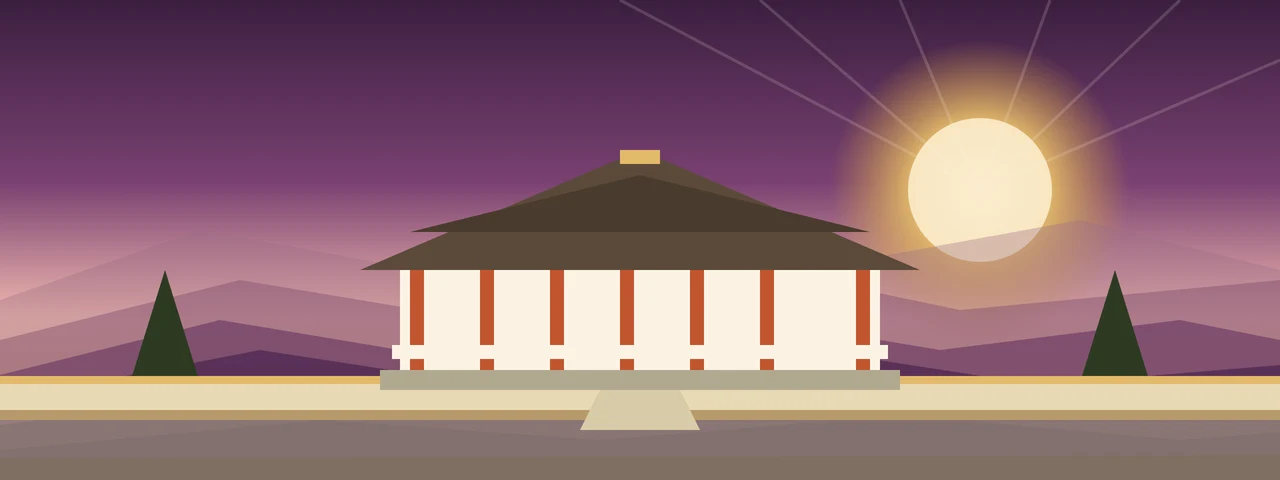
The Kyoto Imperial Palace — Kyōto Gosho — was the residence of Japan's imperial family for centuries, right up until the capital formally moved to Tokyo in 1869. Set inside a large, walled park in the middle of the city, it remains one of Kyoto's most significant historical sites, and one that's easy to underestimate if you've only heard of it in passing.
What's actually there
The complex includes the Shishinden, the ceremonial hall used for the enthronement of emperors as recently as the 20th century, along with residential halls, gates, and a set of gardens that were maintained specifically for imperial use rather than public display. The architecture is deliberately more restrained than a Western palace — wide, unadorned wooden structures and raked gravel courtyards rather than ornate decoration.
How visiting works
Unlike many of Kyoto's major sights, the Imperial Palace grounds are free to enter, managed by the Imperial Household Agency rather than a private or temple organisation. Access has become considerably easier over the years — in the past a guided tour or advance application was required, but general public access to the outer grounds is now straightforward; some interior buildings and special areas may still require separate arrangement, so it's worth checking current access rules if you want to see beyond the grounds themselves.
Kyoto Gyoen: the park around it
The palace sits inside Kyōto Gyoen, a large public park that's free and open at all times, popular with both visitors and local residents for walking, running, and simply having green space in the middle of the city — worth building time for even if the palace buildings themselves are a secondary interest.